
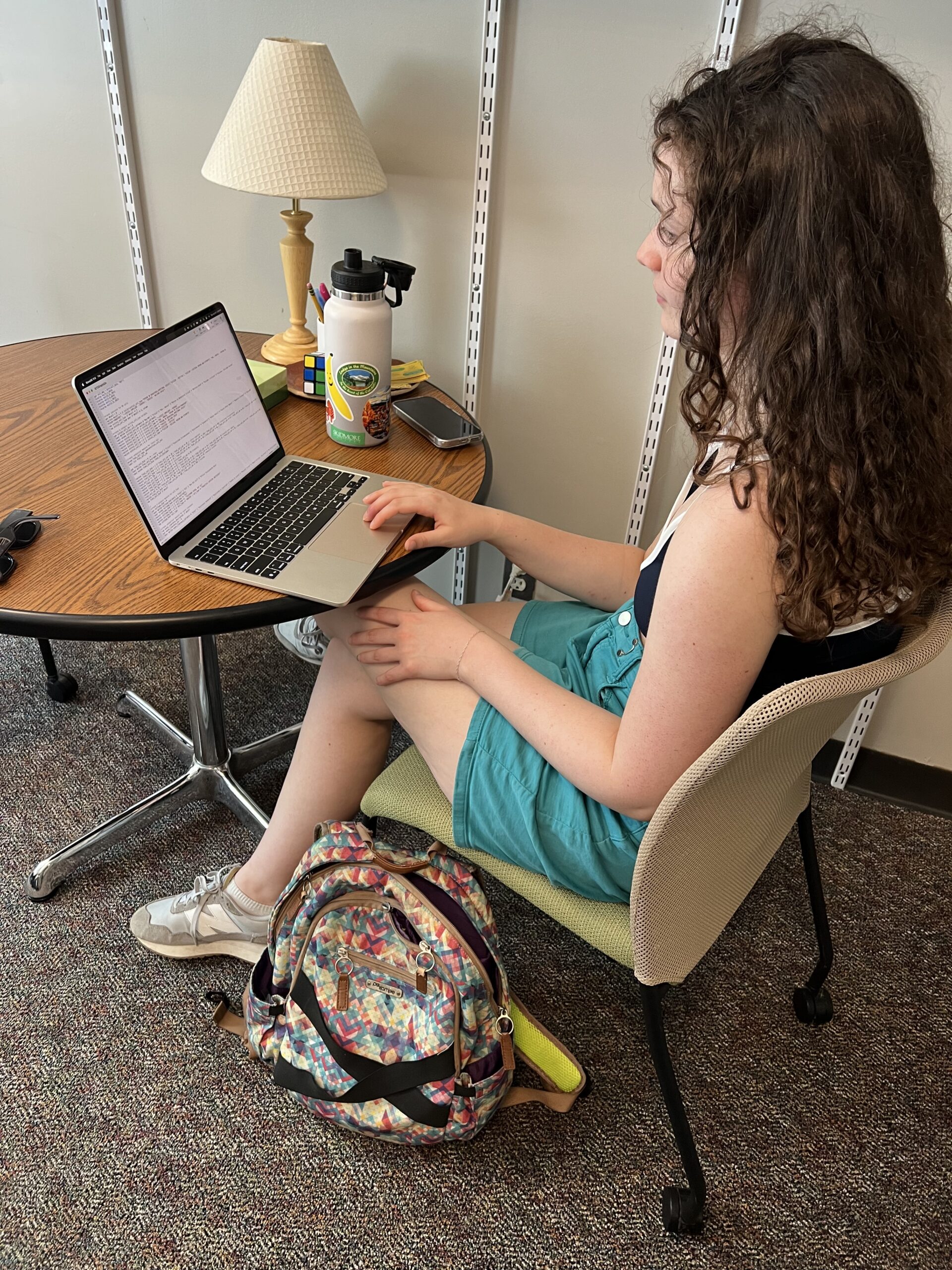
Here I am working on the project this summer!
Seattle Mental Health Police Calls
More than 2,000 people were killed by the police in a mental-health related incident between 2015 and 2024 (The Washington Post 2024). Yet, the police are—in many locales—the primary first responders to mental health emergencies. In this project, we ask two research questions: (1) How have police calls related to mental health changed over time, both in terms of frequency and in type? (2) How do police calls related to mental health vary spatially? We will quantitatively test hypotheses emerging from qualitative sociology about the relationships between race, class, and police involvement in mental health.
Our data include geo-located records of all calls to the Seattle Police Department from 2013-2025 collated with Census block-group level characteristics from the American Community Survey. We use negative binomial regression models to understand the temporal and spatial patterns of police calls related to mental health. This work will bring research about how police respond to health crises (e.g., Bittner 1967; Lara-Millan 2014) into conversation with research on spatial variation in urban policing (e.g., Beck 2020; Gordon 2022; Johnson and Guy 2025; Moore and Gleit 2025).
Through this project, I have improved my quantitative analysis skills, including learning the language R! I have also participated in important collaborative decision-making about the project and navigated challenges such as setbacks in the data collection process and working with confidential data from institution (Seattle Police Department). I am planning on presenting a portion of this large project at the Eastern Sociological Society Conference in March, as well as devoting more time to the project through an independent study.
Status
Collaborators
My Role
Research Assistant and Independent Study
Dates
May 2025 – Present